BALL x PIT
- 4.6
- Rating
- 1.00M
- Installs
- Free
- Price

 Analysis by App-foxy
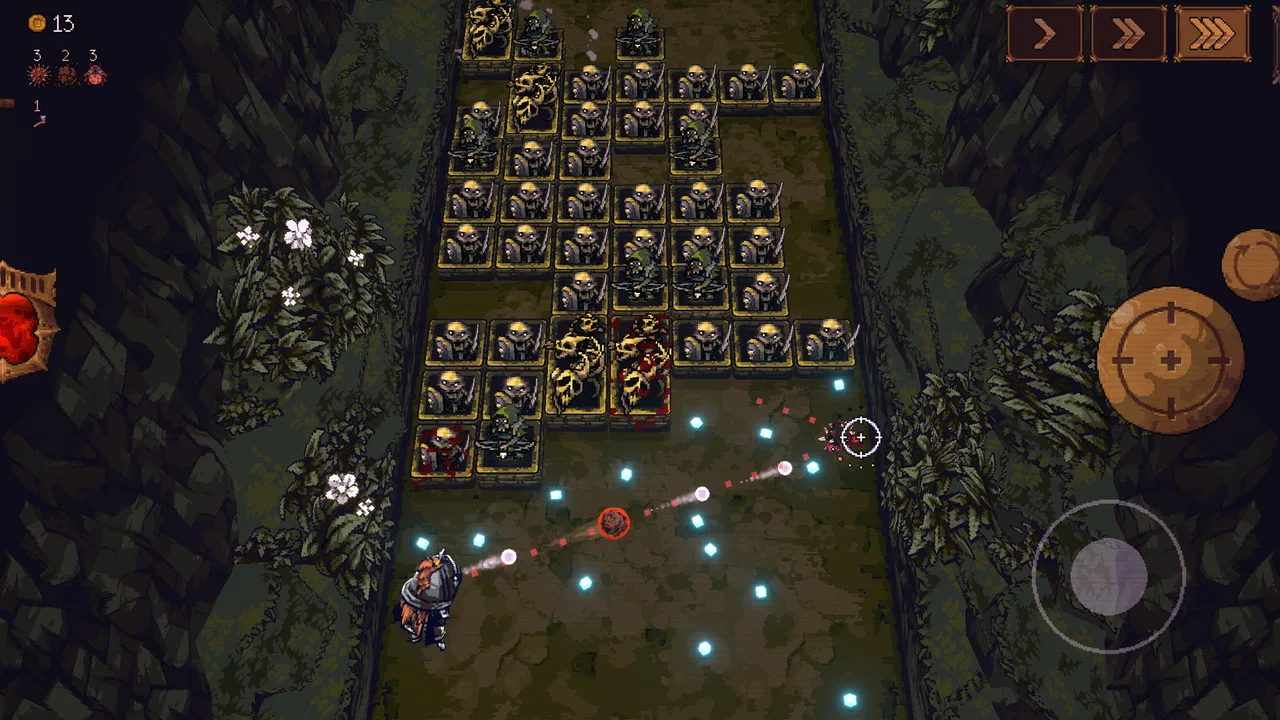
I went into BALL x PIT expecting a quick arcade distraction and found something more demanding: a game that asks me to aim, react, experiment, and make sensible long-term choices at the same time. It combines brick-breaking action with ball combinations, survival pressure, and a base-building layer, so each run has a satisfying rhythm of immediate decisions followed by broader planning.
That mixture is the main reason I would recommend it to someone who enjoys arcade games but wants more to think about than simply chasing a high score. The first minutes are easy to understand, yet the decisions become less obvious once several options compete for attention. I never felt that I was only repeating one gesture. Even a short session can involve choosing a target, deciding whether to improve an existing ball effect, and considering what will help the next attempt.
It is a free game from DevolverDigital, with optional in-app purchases priced from $9.99 to $12.99 per item. Its Teen content rating is worth keeping in mind before installing it for a younger player. The game has a 4.7 average from around 8.6K ratings and has passed 500K installs, which matches my impression that it has found a strong audience among players who like compact but replayable arcade experiences.
You May Also Like

 Blood Strike: 2.5 Anniversary
Blood Strike’s Loadouts Turn Every Drop Into a Tactical Gamble
A close look at Blood Strike’s custom loadouts: how fast access to signature weapons reshapes its battle royale rhythm, rewards preparation, and narrows the gap between fights.

 Pandora - Music & Podcasts
Pandora’s Music Is Easy to Start, but Harder to Recover
Pandora’s strength is its low-effort path from a seed to a station. Its weak spot is how much confidence it asks you to place in connection, setup, and quiet recovery.

 8 Ball Pool
 Is Built on Rivalries, Rematches, and Routine
A close look at the rivalries, rematches, shared routines, and unanswered safety questions that turn a quick pool match into a persistent mobile community.

 Samsung Music
’s Quiet Strength Is Playing What You Already Own
Its reach comes less from spectacle than from dependable access to a personal library. That simplicity is both the app’s strongest retention engine and its ceiling.

 AccuWeather: Weather Radar
AccuWeather Review: A Quick, Clear Forecast for Everyday Decisions
For everyday plans, the best forecast is the one you can understand quickly. AccuWeather makes rain timing, radar, and local conditions easy to act on, with a few trade-offs.

 Hill Climb Racing
Why Hill Climb Racing Still Turns Crashes Into One More Run
A tiny car, a bumpy hill and one more upgrade: Hill Climb Racing keeps resurfacing because its simple chaos makes every near-miss feel personal.
More From Our News Desk



What the first run feels like
The basic idea is wonderfully clear: break formations, keep the action under control, and use the balls you earn or combine to become more effective. The brick-breaking foundation makes the opening accessible because I immediately understand what the ball is doing and what I am trying to hit. The survival structure changes the mood, though. I am not just clearing a screen and moving on without consequences; I am trying to stay effective while the pressure rises.
The ball-fusing element gives the game its most distinctive personality. Instead of treating every ball as a disposable projectile, I start thinking about how different choices can work together. A useful upgrade is not always the one that looks strongest in isolation. Sometimes a modest improvement that fits my current setup is better than taking something flashy that leaves the rest of the run unfocused.
The base-building side also matters because it gives failed attempts a sense of purpose. When a run ends, I do not feel that all progress has vanished into thin air. There is a larger reason to return, improve my approach, and try another route. That structure makes the game easier to play in bursts than a traditional arcade title that only offers a score to beat.
Still, this is not a calm puzzle game. The arcade layer can become busy, and the survival pressure means that hesitation has a cost. If you prefer games where every move can be planned slowly, the pace may feel uncomfortable. I enjoy that tension, but I would not describe the experience as relaxing once a run becomes complicated.
Installing it and choosing the right expectations
The game is free to download and supports devices running Android 6.0 or later. Its current version is 1.300, and it was released on March 11, 2026. I would treat those details as a practical starting point rather than a promise that every device will feel identical. On a first installation, I would make sure the phone has enough free space, close unrelated apps, and begin with a short session rather than assuming I need to understand the whole system immediately.
The most important expectation is that the opening run teaches through action. You do not need to memorize a complicated build before playing. I found it more useful to watch what the balls were doing, notice which targets were causing trouble, and then make one deliberate adjustment at a time. Trying to optimize everything immediately makes the first session feel more confusing than it needs to be.
I also recommend deciding in advance whether you want to spend money. The free entry point is enough to try the core loop, while the optional purchases can be considered separately. For me, the sensible approach is to play several runs first and decide whether the longer-term progression suits my habits. Buying before understanding the rhythm would remove the chance to judge the game on its own terms.
How I approached the first meaningful success
My first useful goal was not to create a perfect combination. It was simply to complete an early section while keeping my choices coherent. That distinction matters. A new player can easily grab every attractive option and end up with a collection that looks powerful but does not work together. I had better results when I chose a direction and resisted unnecessary changes.
During the opening action, I focused on aiming for groups of bricks rather than obsessing over one stubborn target. A ball that reaches several useful surfaces can create more value than one that is directed at the nearest brick every time. I also tried to notice the return path. The first impact is obvious, but the angle after that impact often determines whether the ball continues doing useful work or disappears into a low-value area.
My practical sequence looked like this:
I watched the first few rebounds before making aggressive choices, using them to understand the current angle and the shape of the field.
I favored combinations that supported the balls already performing well instead of changing direction after every reward.
I treated survival as a resource. Staying alive long enough to make another informed choice was often more valuable than taking a risky option for immediate power.
After the run, I considered what actually caused the failure: poor targeting, an unfocused build, or a decision made too late.
This approach produced my first meaningful success more reliably than trying to play at maximum speed. The game is fast, but fast does not mean thoughtless. A brief pause to identify the most dangerous part of the situation can prevent a chain of bad decisions.
One non-obvious lesson is that the base-building layer should influence how you judge a run. If you only measure success by how far you got, you may abandon the game too quickly after a disappointing attempt. I found it more helpful to ask whether the run taught me something about combinations, aiming, or priorities. That mindset turns repetition into practice instead of making every loss feel like wasted time.
Confusion points that can slow down new players
The first common confusion is assuming that the strongest-looking ball choice is automatically the best one. In a game built around fusing and survival, compatibility matters. A choice that improves one part of the setup may be less useful if it does not support the way I am already dealing with the field. I learned to compare an option with my current plan rather than judging it alone.
The second is mistaking movement for progress. Breaking something immediately feels productive, but not every hit has equal value. If I aim without considering the next rebound, I can spend time clearing easy targets while allowing a more serious threat to remain. The better habit is to think one bounce ahead whenever the situation allows it.
Another point of friction is the relationship between a run and the base. The two layers serve different purposes. The run is about moment-to-moment survival and tactical choices; the base gives the broader structure a reason to continue. If you expect every improvement to appear instantly inside the next few seconds, the progression can feel less direct than a conventional arcade game.
I would also avoid changing several things at once when learning. If I alter my aiming style, choose a completely different combination, and make a new base decision in the same attempt, I cannot tell which change helped. Testing one idea per run is slower in the beginning but much more useful. This is especially important for players who normally rely on reflexes and may not be used to analyzing why an arcade attempt failed.
The Teen rating is another practical consideration. I would not install it for a child simply because the controls look approachable. The survival pressure and game presentation are aimed at an older audience, and parents should make their own judgment before handing over the device.
Small-screen play, session length, and everyday use
I see BALL x PIT working particularly well as a short-session game. For example, I can imagine playing it while waiting for an appointment: one run gives me a complete activity, and I do not need to commit to a long story chapter or remember a complicated plot. The base-building layer makes that short session feel connected to the next one, which is more satisfying than closing an arcade game with nothing except a temporary score.
At the same time, the game can encourage “one more run” behavior. A failed attempt often leaves a clear question in my mind: would a different combination, a better angle, or a more patient decision have changed the result? That is a strength when I have a few spare minutes, but it can become a weakness if I am looking for something that naturally ends after one quick round.
Touch controls make precision and screen awareness important. I found it easier to play when I kept my attention on the whole active area instead of staring at one brick. Players using a smaller phone may need a little time to become comfortable with the visual density during busier moments. That is not a reason to reject the game, but it does make the first sessions feel better when played without distractions.
Compared with a standard brick-breaker, this offers more reasons to return because of its fusing, survival, and base-building structure. Compared with a pure survival roguelite, it places more emphasis on angles, rebounds, and arcade timing. Compared with a traditional base-building game, it is much more active and immediate. Those comparisons explain both its appeal and its limitation: someone searching for a pure score-chasing game may find the extra systems distracting, while someone wanting deep strategic management may find the action too dominant.
Who should play it, and who should skip it
I would recommend it to players who like experimenting inside a run, learning from failed attempts, and making choices under pressure. It is also a good fit for people who enjoy arcade mechanics but want progression that gives repeated sessions a larger purpose. Fans of roguelite structures may appreciate the way each attempt can become a test of judgment rather than a simple replay of the previous one.
I would be more cautious about recommending it to someone who dislikes repeated failure. The game asks you to return to the same broad challenge with a better understanding of what went wrong. If you want a smooth sequence of guaranteed victories, this is probably not the right choice. I would also point players toward a simpler brick-breaker if their priority is immediate, low-commitment action without a build or base to consider.
It may not suit players who dislike optional purchases in free games either. The game can be tried without paying, but the presence of items priced between $9.99 and $12.99 means anyone sensitive to monetization should decide on a personal spending boundary before getting invested. That small bit of discipline keeps the decision in your hands instead of letting a tempting moment define the experience.
How to get more from the second and third runs
Once the opening controls feel familiar, I would start keeping a mental note of three things: which ball choices consistently help, which targets cause the most trouble, and when a run begins to lose focus. These observations are more valuable than copying a single “best” approach because they help you adapt to your own mistakes.
A particularly useful trade-off is between immediate clearing and future flexibility. Taking the fastest-looking improvement can help survive the current moment, but preserving a balanced setup may create better choices later. I do not follow one rule every time. When the field is dangerous, I value the option that stabilizes the run; when the situation is under control, I am more willing to test an unusual combination.
I also avoid treating the base as a reward screen that can be ignored. It is part of the reason the game remains engaging after a loss. Before starting again, I consider whether the previous attempt exposed a weakness that the base can help me address or whether I simply need better execution. Separating those two problems prevents me from making a long-term change to solve a short-term aiming mistake.
Another practical tip is to use the early part of a run as observation time. New players often spend their attention on the most visible brick, but the opening moments are useful for learning how the current setup behaves. If I understand the rebound pattern before the field becomes crowded, I can make later choices with less panic.
My final take after settling into the loop
The best part of BALL x PIT is the way a simple arcade action grows into a chain of meaningful decisions. Breaking bricks is immediately understandable, yet fusing balls, surviving longer, and improving the base give that familiar action a longer tail. I like that the game rewards both reflexes and reflection. A strong run is not only about moving quickly; it is about recognizing which choices belong together.
Its limits are just as clear. The pressure can be tiring, repeated attempts will not appeal to everyone, and the extra systems may feel unnecessary to players who only want a traditional brick-breaker. Optional purchases also mean that free-to-play players should approach it with a clear spending boundary. Those are real considerations, not minor footnotes.
Even so, I think the free version is worth trying for anyone curious about an arcade game with roguelite ambition. I would begin with a few patient runs, aim for a coherent setup rather than a flashy one, and use each failure to identify one specific adjustment. If that process sounds enjoyable, the game has enough structure to keep pulling me back. If it sounds like work, a simpler arcade alternative will probably be a better match.
DevolverDigital has built something that is easy to start but not instantly exhausted. After learning the first successful routine, I still had reasons to experiment with different combinations and reconsider my priorities. That is why I would recommend it to a friend who wants a free mobile game for short sessions but does not want every session to feel disposable.
FAQs for BALL x PIT
01What is BALL x PIT about?
BALL x PIT is an engaging puzzle game where players navigate a ball through a series of challenging pits and obstacles. The objective is to strategically maneuver the ball to reach the target while collecting rewards and avoiding pitfalls. The game features intuitive controls, vibrant graphics, and progressively difficult levels, making it both fun and challenging.
02Is BALL x PIT free to play?
Yes, BALL x PIT is free to download and play. However, it does offer in-app purchases for players who wish to enhance their gaming experience. These may include extra lives, bonus levels, or special power-ups. While these purchases can enhance gameplay, they are entirely optional, and players can enjoy the full game without spending money.
03What devices are compatible with BALL x PIT?
BALL x PIT is available on both Android and iOS platforms. It supports a wide range of devices, but it's recommended to have a device with the latest software update for the best performance. Check the specific app store for detailed compatibility information to ensure smooth gameplay on your device.
04Does BALL x PIT require an internet connection?
BALL x PIT can be played offline, making it a great option for gaming on the go without the need for an internet connection. However, certain features, such as leaderboards and in-app purchases, require an internet connection to function. Players can enjoy the core gameplay without being online.
05Are there any ads in BALL x PIT?
Yes, BALL x PIT includes ads, which help support the game's free availability. Ads may appear between levels or after a player loses a life. There is an option to remove ads through a one-time purchase, allowing for uninterrupted gameplay. This option is ideal for players who prefer an ad-free experience.
Pros
- Smooth and intuitive gameplay mechanics.
- Vibrant graphics with engaging animations.
- Challenging levels keep users hooked.
- Regular updates with new content.
- Lightweight and doesn't drain battery.
Cons
- Occasional in-app purchase prompts.
- Some levels feel repetitive over time.
- Limited multiplayer options available.
- Ads can be intrusive during gameplay.
- Requires constant internet connection.

BALL x PIT
Gallery